
Space Exploration: New Technologies for Missions to Mars and Beyond
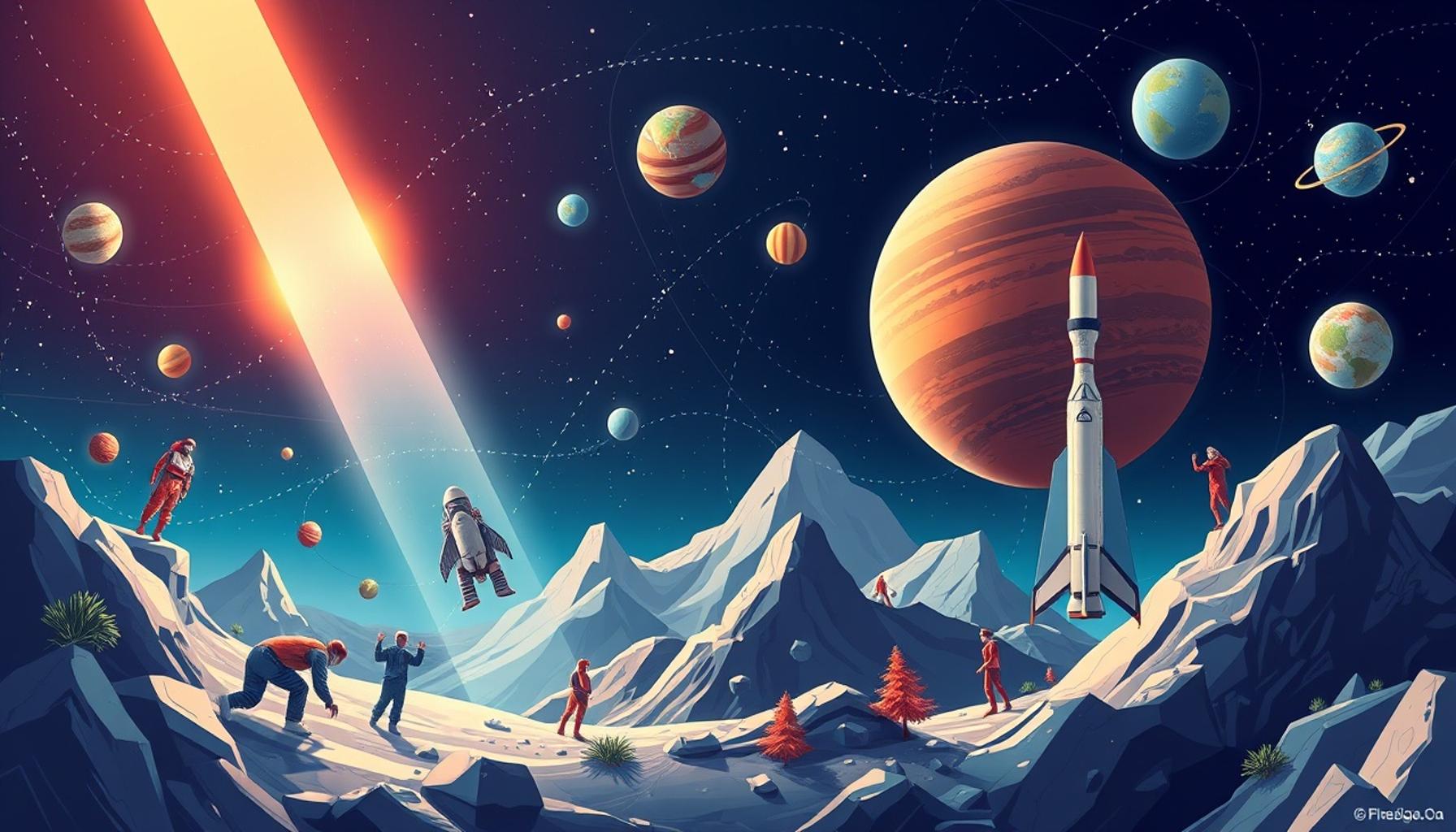
The Exciting Evolution of Space Exploration
The quest for knowledge beyond our planet has always been a captivating journey. Exciting advancements in space exploration technology are making missions to Mars and beyond more feasible than ever before. As we stand on the brink of a new era in space travel, it’s essential to understand the tools propelling us forward.
Current innovations focus on improving various aspects of space missions, which have historically faced numerous challenges. These advancements can be categorized into three primary areas:
- Propulsion Systems: New engines, such as those powered by ion and solar propulsion, offer greater efficiency and speed compared to traditional rocket engines. For example, NASA’s Development of the Solar Electric Propulsion (SEP) system demonstrates how solar energy can be harnessed to propel spacecraft, significantly reducing the amount of fuel needed. This not only lowers costs but also enables longer missions, essential for reaching distant destinations like Mars.
- Life Support Systems: As humanity looks toward establishing a lasting presence on other planets, advanced recycling technologies are crucial. Innovations in air and water recycling systems allow astronauts to reutilize resources, mimicking Earth’s ecosystems. Projects like NASA’s Advanced Life Support program showcase how effective waste management and resource recovery are fundamental for survival in extraterrestrial environments.
- Robotics and AI: The role of autonomous robots and AI in space missions is becoming increasingly important. For instance, the Mars rovers like Curiosity and Perseverance use AI to navigate the Martian terrain and conduct scientific experiments. These technologies gather critical data and help plan future exploration strategies, allowing for safer and more efficient missions in uncharted territories.
Each of these technologies plays a vital role in ensuring the success of future missions. NASA and private companies like SpaceX are leading the charge, with ambitious plans for the Red Planet:
- Manned Missions: Both NASA and SpaceX aim to achieve crewed flights to Mars within the next decade, with timelines suggesting potential launches as early as the mid-2030s. This goal represents a monumental step for humanity, as we aim to become an interplanetary species.
- Base Stations: Establishing habitats for long-term human presence on Mars is not just a dream but an essential plan. These base stations will provide shelter, research facilities, and resource extraction capabilities, facilitating sustained human activity on the Martian surface.
- Exploration of Jupiter’s Moons: Future missions are also targeting the icy worlds of Europa and Ganymede, which are believed to harbor subsurface oceans. Such missions could revolutionize our understanding of potential life beyond Earth and the diversity of habitable environments in our solar system.
As we explore these developments, we can look forward to not just visiting Mars but also uncovering the mysteries of the universe. The journey is just beginning, and the discoveries ahead promise to reshape our understanding of life beyond Earth. With continued investment in technology and international cooperation, humanity is poised to unlock the secrets of the cosmos, illuminating our place in the universe and expanding our horizons like never before.
CHECK OUT: Click here to explore more
Innovations Driving the Future of Space Travel
The journey to explore Mars and other celestial bodies hinges on the continuous evolution of technology. Each innovation not only enhances current mission capabilities but also sets the stage for ambitious future endeavors. Drawing from a rich history of space exploration, engineers and scientists are making strides in key technological areas that can revolutionize how we travel beyond our planet.
Let’s delve deeper into the primary areas of advancement:
Propulsion Systems
Propulsion systems are at the very heart of space travel, determining how quickly and efficiently spacecraft can reach their destinations. Traditional chemical rockets, while effective for launches, are limited by the amount of fuel they can carry. In response, scientists are developing new propulsion methods that promise to overcome these limitations.
- Ion Propulsion: This technology uses electric fields to accelerate ions and produce thrust. Ion engines can operate continuously for longer periods compared to conventional ones. NASA’s Dawn spacecraft, which explored the asteroid belt, is a prime example; it successfully utilized ion propulsion to travel vast distances, illustrating the technology’s potential for missions to Mars.
- Solar Electric Propulsion (SEP): By harnessing solar energy, SEP systems allow spacecraft to efficiently utilize renewable resources while in space. This approach significantly reduces the dependence on chemical propellants. Such technology not only enhances the longevity of missions but also opens new avenues for exploring distant planets and moons.
Life Support Systems
Ensuring the safety and well-being of astronauts during extended missions is crucial, and that begins with robust life support systems. These systems are designed to create a sustainable environment for human life while minimizing resource consumption.
- Water Recycling: Advanced technologies are capable of purifying waste water for reuse, a necessity for missions where resources are scarce. NASA’s experiences aboard the International Space Station (ISS) have informed the development of systems that recycle approximately 90% of water used by astronauts, making long-duration missions to Mars feasible.
- Air Filtration and Recreation: Innovations in these systems allow for the removal of carbon dioxide and the recycling of breathable air. Using a combination of chemical processes and biological systems, researchers are creating technologies that closely mimic natural Earth processes, which is vital for habitats on Mars.
Robotics and AI
To navigate the challenges of exploring foreign terrains, robotics and artificial intelligence (AI) are becoming indispensable. These technologies enhance our ability to gather data and execute tasks that would be dangerous or impossible for human astronauts.
- Autonomous Rovers: Rovers like NASA’s Perseverance are equipped with advanced AI algorithms that allow them to analyze their environment in real-time. This autonomy means they can make decisions about which samples to collect or how to navigate obstacles without waiting for instructions from Earth.
- Robotic Assistants: Beyond rovers, robotic systems are in development to assist astronauts both on the surface of Mars and aboard spacecraft. These robots can perform tasks like repairs, maintenance, and even complex scientific experiments, freeing astronauts to focus on other critical mission objectives.
By leveraging these innovative technologies, humanity is not just preparing for a foot on Mars but actively paving the way for a future of possibilities in space exploration. Each advancement brings us one step closer to understanding the mysteries of our universe and potentially our place within it.
CHECK OUT: Click here to explore more
Enhancing Our Understanding of Space Through New Technologies
As we venture further into space and make plans for crewed missions to Mars and beyond, continuous advancements in technology are not only supporting the physical journey but also enhancing our understanding of the cosmos. These technologies help unlock the mysteries of the universe while improving the overall safety and effectiveness of space missions.
Spacecraft Design and Materials
The design and materials used in spacecraft play a significant role in their ability to withstand the harsh conditions of space travel. Innovations in this area are crucial for developing durable, lightweight, and efficient spacecraft.
- Advanced Composites: New lightweight materials, such as carbon-fiber reinforced composites, are being used in spacecraft construction. These materials offer high strength while significantly reducing weight, leading to more efficient fuel consumption. For example, the Space Launch System (SLS) employs these composites, showcasing their potential in launching heavier payloads into orbit.
- Thermal Protection Systems: As spacecraft re-enter the Earth’s atmosphere or encounter the intense environmental conditions on Mars, effective thermal protection is vital. Innovative heat shield materials such as ablative tiles and heat-resistant ceramics are being developed to ensure spacecraft and their occupants are shielded from extreme temperatures, preserving both equipment and human life.
Communication Systems
As missions to Mars advance, maintaining robust communication systems is essential for ensuring data relay and astronaut safety. Innovations in communication technology are addressing these challenges effectively.
- Laser Communication: Traditional radio frequencies have their limitations, particularly over long distances. NASA is exploring laser-based communication technologies that can transmit data at much higher speeds, allowing for real-time streaming of scientific data and video feeds from Mars. The Laser Communications Relay Demonstration is a promising initiative that aims to significantly enhance data transmission capabilities.
- Deep Space Network Enhancements: The Deep Space Network (DSN) plays a crucial role in communication with distant spacecraft. Ongoing upgrades to this network involve advanced antennas and signal processing technologies to improve the quality and speed of communications, enabling astronauts and mission control on Earth to interact more effectively as they explore Martian territories.
In-Situ Resource Utilization (ISRU)
One of the key challenges for missions to Mars is the need to bring sufficient supplies of food, water, and fuel. In-Situ Resource Utilization (ISRU) technologies aim to enable astronauts to utilize the natural resources available on Mars, reducing dependency on supplies shipped from Earth.
- Regolith Utilization: Mars has ample regolith, the loose material on its surface. Researchers are developing methods to convert regolith into building materials for habitats and roads, paving the way for sustainable bases on the planet’s surface.
- Oxygen Production: The MOXIE experiment on the Perseverance rover is one notable project that demonstrates the extraction of oxygen from Martian carbon dioxide. By producing oxygen to support crewed missions and even as rocket propellant for return trips to Earth, such technology could significantly decrease the costs and logistics involved in human exploration of Mars.
Through the persistent innovation in spacecraft design, communication systems, and resource utilization, humanity is better equipped than ever to engage in profound exploration of Mars and beyond. Each of these advancements not only enhances mission viability but also equips us with the knowledge needed to unravel the secrets of the universe. As we continue to develop these technologies, our dreams of successful human exploration will become more tangible, enabling us to reach for the stars like never before.
CHECK OUT: Click here to explore more
Conclusion
The future of space exploration, particularly in our quest to reach Mars and beyond, is driven by groundbreaking technologies that enhance our capabilities and deepen our understanding of the universe. As we have explored, advancements in spacecraft design, communication systems, and In-Situ Resource Utilization (ISRU) are not merely technical upgrades; they represent a pivotal shift towards sustainable space exploration. These innovations make it feasible to conduct long-duration missions while ensuring astronaut safety and mission success.
By employing advanced materials and sophisticated communication technologies, we are laying the groundwork for a future where humans can colonize other planets. Not only do these innovations help manage the harsh environments of space travel, but they also allow for real-time data exchanges, enhancing our scientific knowledge. Initiatives like the MOXIE experiment demonstrate how we can harness Martian resources to create vital supplies, significantly lowering the challenges faced by upcoming missions.
As we look forward, it is crucial to remember that every leap in technology brings us closer not just to our goal of Mars exploration, but also to expanding the frontiers of human experience. Our continued investment in these technologies not only fosters international collaboration but also inspires future generations of scientists and explorers. Together, we are on the brink of a new era of discovery, ready to unlock the vast potential of the cosmos. As we stand at this precipice, the excitement of exploration propels us towards a future full of possibilities, urging us to reach for the stars.

Linda Carter
Linda Carter is a writer and expert known for producing clear, engaging, and easy-to-understand content. With solid experience guiding people in achieving their goals, she shares valuable insights and practical guidance. Her mission is to support readers in making informed choices and achieving significant progress.