
Innovations in Urban Mobility: The Impact of Autonomous Vehicles on Modern Cities
Understanding the Transformation
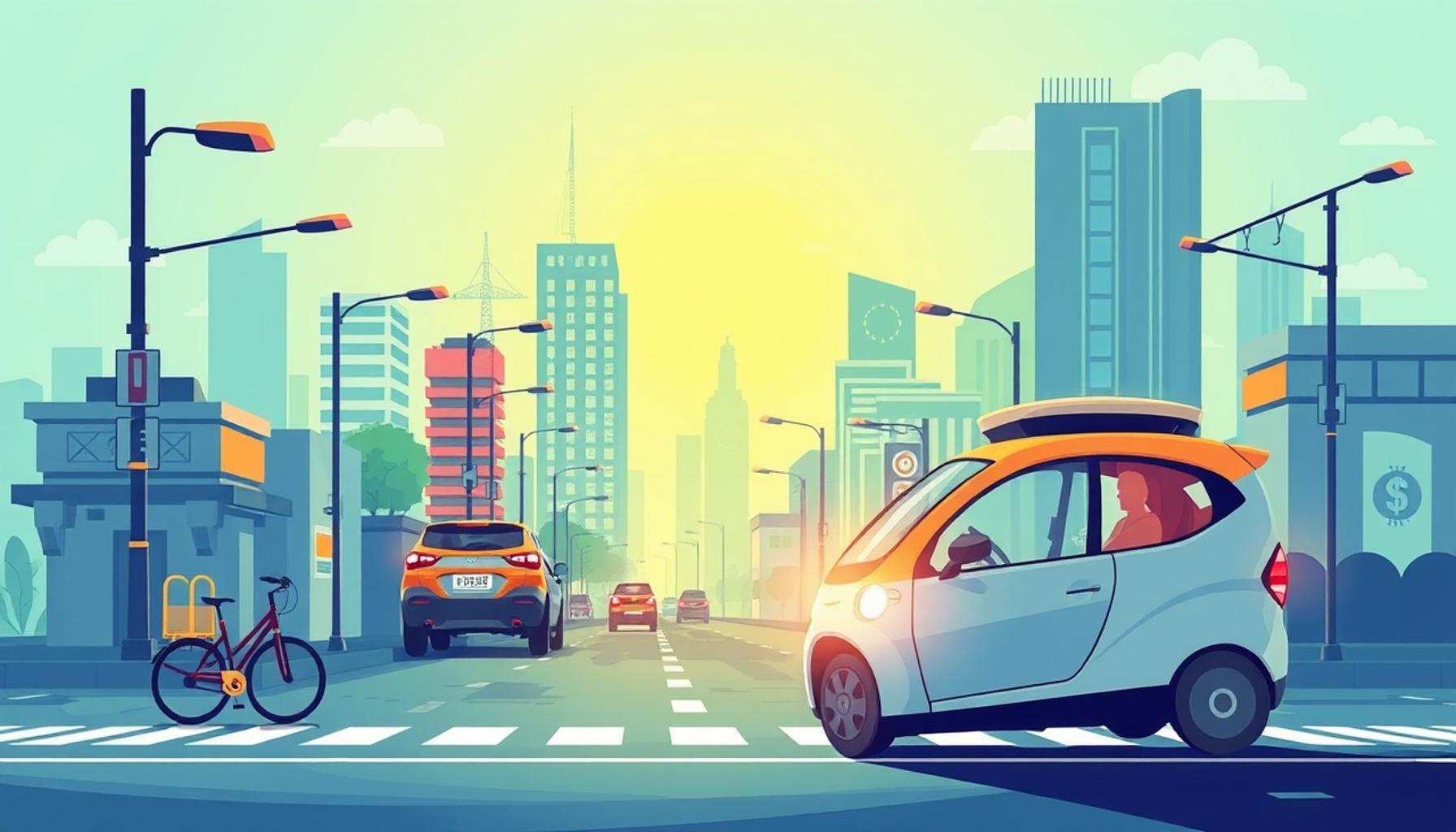
In recent years, the concept of urban mobility has been taking on a new meaning, largely due to the advent of autonomous vehicles. These self-driving cars, buses, and shuttles are not just futuristic fantasies; they represent a significant leap in transportation technology that holds the potential to revolutionize the way cities function.
The benefits of implementing autonomous vehicle technology are manifold and can be understood in several key areas:
- Efficiency: One of the most compelling advantages of autonomous vehicles is their ability to optimize traffic flow. For instance, they can communicate with each other through advanced algorithms and sensors to reduce stop-and-go traffic, thereby minimizing congestion. A study from the University of California, Berkeley, found that if 10% of vehicles on the road were autonomous, it could significantly reduce travel times during peak hours.
- Accessibility: Autonomous vehicles are designed to enhance mobility for those who may have difficulty driving, such as the elderly and disabled. Consider the impact of such technologies in cities like San Francisco, where companies are testing autonomous shuttles that specifically cater to individuals with mobility challenges. These vehicles could provide vital access to public spaces, healthcare, and employment opportunities, contributing to a more inclusive urban landscape.
- Sustainability: Many autonomous vehicles are electric, meaning they contribute to lower emissions than traditional gasoline-powered cars. For example, Tesla’s self-driving technology is paired with electric powertrains, showcasing how the move towards autonomy can coincide with greener transportation solutions. The shift to electric autonomous vehicles not only helps to combat climate change but also improves air quality in urban areas.
Yet, as we embrace these innovations, it is crucial to acknowledge the accompanying challenges. The integration of autonomous vehicles into our cities requires significant investment in infrastructure. Cities must create dedicated lanes, update traffic management systems, and enhance public transportation networks to accommodate automated transit systems. Furthermore, safety concerns loom large; autonomous systems must prove their reliability to gain public trust, and regulatory frameworks must be established to oversee their operation effectively.
Other cities around the United States are already experimenting with these transformative changes. For example, in Phoenix, Arizona, Waymo has developed a fleet of autonomous minivans providing ride-hailing services, offering residents a glimpse into a future where cars drive themselves. Learning from these real-world applications allows us to recognize the necessary adaptations we must consider as urban environments evolve.
By understanding the implications of autonomous vehicles on urban planning, we position ourselves to embrace a future where smart transportation systems are seamlessly integrated into the fabric of city life. This integration will require collaboration between technologists, urban planners, and policymakers to create safe, efficient, and inclusive urban mobility solutions.
CHECK OUT: Click here to explore more
Transforming Transportation Dynamics
The introduction of autonomous vehicles (AVs) is set to alter the transportation dynamics within urban environments fundamentally. As cities grow denser, the challenges of traffic congestion, safety, and environmental sustainability become more pronounced. Autonomous vehicles offer a practical solution to these complex problems by introducing an efficient and reliable mode of transportation.
To fully grasp the transformative power of AVs in urban mobility, let’s delve deeper into several critical dimensions:
- Safety: One of the primary concerns in urban transportation is road safety. Autonomous vehicles, equipped with advanced sensors and artificial intelligence, have the potential to significantly reduce accidents caused by human error, which accounts for approximately 94% of all traffic accidents in the United States. By utilizing technologies such as lane-keeping assistance and adaptive cruise control, AVs can anticipate and react to dangerous scenarios more effectively than human drivers. For example, cities like Pittsburgh have witnessed pilot programs where self-driving cars demonstrate improved safety records, helping to build public confidence in self-driving technology.
- Economic Impact: The shift toward autonomous mobility can stimulate local economies. AVs can create new jobs in technology, maintenance, and infrastructure development, while also enabling existing jobs that rely on transportation and logistics to become more efficient. Furthermore, by reducing travel times and improving access to urban centers, autonomous vehicles can enhance economic activity. A study commissioned by the U.S. Department of Transportation suggests that optimizing the use of AVs could lead to a reduction in transportation costs by up to 30%, allowing individuals and businesses to allocate resources more effectively.
- Urban Planning: The integration of AVs into cityscapes will necessitate a reevaluation of urban planning and zoning regulations. As these vehicles become more prevalent, the demand for parking spaces may decline due to their ability to drop off passengers and reposition themselves. Ultimately, this movement could free up valuable real estate for other uses, such as parks, housing, or commercial developments. Cities like Los Angeles are already exploring innovative planning strategies, examining how AVs can reshape the urban landscape and improve the quality of life for residents.
Nevertheless, while the potential benefits of autonomous vehicles are compelling, the road ahead is not without obstacles. Cities must carefully consider how to update their transportation infrastructure and manage the integration of AVs alongside traditional vehicles. This includes preparing scenarios for mixed-use roadways and determining how to incorporate AVs within existing public transport systems. Moreover, as these vehicles proliferate, questions surrounding cybersecurity and data privacy will also loom large, demanding robust policies and regulations to ensure the safety of users and their information.
As cities embark on this journey towards integrating autonomous vehicles into their fabric, a thoughtful approach that encompasses technology, policy, and community engagement will be essential. By fostering collaboration among stakeholders, including city planners, technology developers, and residents, we can create holistic strategies that harness the advantages of this transformative technology while addressing the accompanying challenges.
CHECK OUT: Click here to explore more
Enhancing Accessibility and Inclusivity
One of the most significant impacts of autonomous vehicles (AVs) in urban mobility is their potential to enhance accessibility and inclusivity for diverse populations. Many individuals, including the elderly, people with disabilities, and those without access to private transportation, face challenges when navigating urban environments. AV technology holds the promise of creating a more equitable transportation system, fundamentally changing how these groups engage with cities.
For instance, self-driving shuttles can be deployed in neighborhoods with limited public transport options, providing essential mobility to residents who may otherwise be isolated. In communities across the United States, pilot programs have shown that AVs are effective at bridging gaps in public transit, contributing to a more inclusive urban environment. A notable example is the collaboration between local governments and tech companies in cities like Austin, Texas, where autonomous shuttle services have been introduced to offer free rides to individuals in underserved areas.
Reduction of Traffic Congestion
Another area where AVs can dramatically influence urban mobility is in the reduction of traffic congestion. By optimizing driving patterns through artificial intelligence, AVs can minimize delays, decrease stop-and-go traffic, and lead to smoother driving experiences. Research suggests that deploying AVs on a large scale could potentially decrease traffic congestion by up to 30%. A promising example can be found in cities like San Francisco, where real-time data and connectivity allow AVs to adjust routes dynamically based on traffic conditions, improving overall traffic flow.
- Carpooling and Shared Mobility: AV technology enables an intuitive approach to carpooling, significantly increasing the number of passengers per vehicle. This forms the basis for shared mobility platforms where autonomous vehicles can accommodate multiple users traveling in the same direction. Not only does this reduce the number of vehicles on the road, but it also lessens the overall environmental footprint of transportation systems.
- Environmental Benefits: The transition to autonomous electric vehicles aligns with current environmental goals to reduce carbon emissions. AVs can be programmed to operate at optimal speeds, use regenerative braking, and manage energy consumption more efficiently than traditional vehicles. Cities like Seattle are experimenting with electric AV fleets to contribute to their sustainability targets, showcasing a potential model for reducing urban pollution while enhancing mobility.
Public Transport Integration
A successful integration of AVs into existing public transport systems is crucial for maximizing their benefits. AVs can serve as first-mile/last-mile solutions, providing connections to train and bus stations, ensuring that commuters can effortlessly transition between different modes of transportation. For example, in the San Jose area, autonomous shuttles are being tested to facilitate convenient access to transit hubs, demonstrating how AVs can complement and enhance the efficiency of public transport networks.
Furthermore, the data collected from AVs can contribute to smarter urban transport management systems by informing traffic signal adjustments and optimizing public transit schedules. This integration promotes a more synchronized transport ecosystem, thereby improving the overall experience for commuters.
As cities explore the multifaceted roles of autonomous vehicles, it becomes evident that the possibilities for enhancing urban mobility are both vast and diverse. The integration of AVs offers the potential for cities not only to address existing transportation challenges but also to embrace innovative solutions that cater to the evolving needs of their residents.
SEE ALSO: Click here to read another article
Conclusion
In summary, the rise of autonomous vehicles (AVs) represents a transformative shift in urban mobility, with the potential to significantly reshape the way we navigate our cities. By enhancing accessibility, reducing traffic congestion, supporting environmental sustainability, and seamlessly integrating with existing public transport systems, AVs are paving the way for a more efficient and inclusive urban ecosystem.
The promise of greater accessibility for marginalized groups, such as the elderly and disabled, highlights the role of AVs in fostering equity within urban transportation systems. Moreover, the reduction of traffic congestion, driven by data and intelligent routing, stands to improve the daily commuting experience for all citizens, ultimately leading to less time spent in transit. This contributes not only to individual well-being but also to environmental goals by minimizing carbon emissions through the adoption of electric AV technologies.
As cities across the United States embrace these innovations, the opportunity arises to create a more sustainable and effective transport network. Urban planners, local governments, and technology companies must work collaboratively to harness the full potential of AVs. This calls for thoughtful integration into existing frameworks, ensuring these vehicles can complement public transport and fill critical gaps in service.
The journey towards a future with autonomous vehicles begins today, and by prioritizing inclusivity, efficiency, and sustainability, we can redefine urban living for generations to come. As we consider the future of cities, it is clear that the impact of AVs will extend far beyond transportation alone, shaping social interactions, economic opportunities, and the very fabric of urban life itself.

Linda Carter
Linda Carter is a writer and expert known for producing clear, engaging, and easy-to-understand content. With solid experience guiding people in achieving their goals, she shares valuable insights and practical guidance. Her mission is to support readers in making informed choices and achieving significant progress.